
Strong Communities and Diversity
This year, community has been at the centre of life in Milton Keynes. From health, to housing, to poverty and disadvantage, community organisations, charities and schools have been filling the gaps where services or funding fall short.

As one respondent to the OU’s Hidden Toil Survey notes: “Schools and voluntary services increasingly provide vital support to those who struggle. I know there are charities doing good work, but they are mopping up where the government doesn’t go far enough.” [1]
This is not just in the context of funding cuts and a cost-of-living crisis, but also Milton Keynes’ growing population. Between 2023 and 2043, the city is forecast to grow by 27%, alongside an increase in ethnic diversity. [2]
Today, the population stands at 305,884 [3], 104.8% higher than the UK average or 2.048 times the average. Between 2022 and 2024, it grew by 4.56%.
Despite these pressures, there is a strong sense of community in Milton Keynes. Many local areas have community organisations, volunteer opportunities and grassroots initiatives. Some of the most vibrant of these also provide opportunities for the city’s diverse communities to connect, find solidarity, and build belonging.
Our survey shows that many within the city have a strong sense of community pride.
- Three-quarters of residents feel that the sense of
community/belonging is getting better or staying the
same [4] - 86% of adults agreed that their local area is a place
where people from different backgrounds get on well
together [5]
However, the OU report highlights that those experiencing poverty and deprivation often have the least access to these community organisations, whether due to the areas they live in or transport barriers, meaning the positive impact is not evenly distributed.
Projects in 2024-25 that highlight community and diversity in the city:
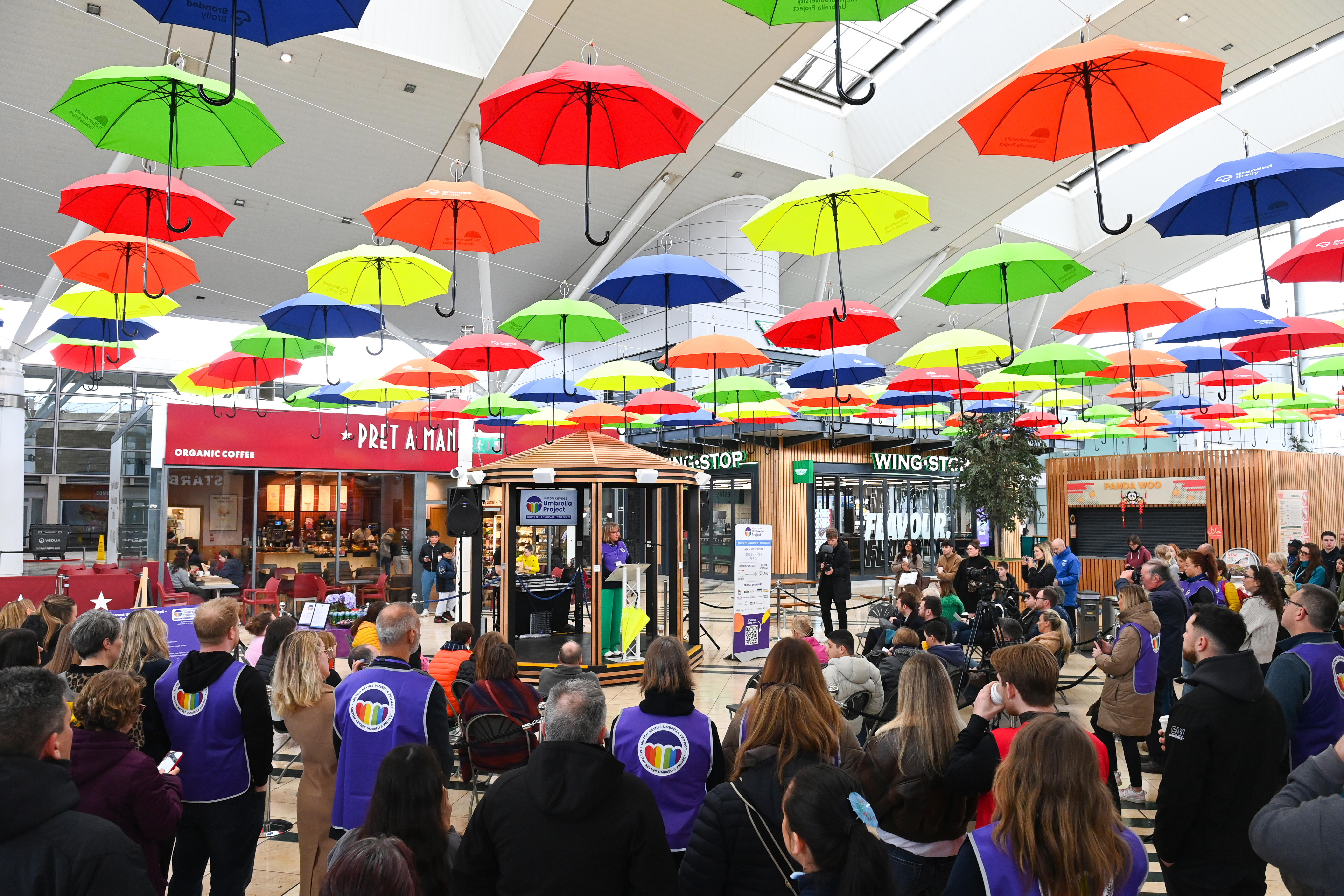
Milton Keynes Umbrella Project – March 2025 [6]
A rainbow-coloured installation of umbrellas at Midsummer Place celebrated and recognising neurodiversity in Milton Keynes, serving as a powerful symbol of inclusion and diversity.
Funding: £33k - donations from MK Community Foundation, MK Businesses, charities and individuals to make this happen.
The event brought together people from all corners of the community. Speakers included the Mayor of Milton Keynes, the MP for Milton Keynes North, a representative from Thames Valley police and speakers from Perfectly Autistic, The Curious Choice and the ADHD Foundation.
The project aims to leave a lasting legacy that encourages a cultural shift towards a neuroinclusive Milton Keynes, through individuals, groups, schools, businesses and organisations committing to the Neurodiversity Charter.
MK Pride 2025
Now in it's sixth year, Milton Keynes Pride Festival is on the verge of becoming the largest free Pride festival in the UK, with many people travelling internationally to attend.
Following April’s Supreme Court ruling on the Equality Act, Jay Virgo, who serves as both MK Pride’s Community Manager and Q:alliance’s Communications and Engagement Manager, explained that Q:alliance saw “a massive influx of trans beneficiaries reaching out, saying ‘I just need someone to talk to,’ about concerns over street and online harassment.”
In this context, and given wider concerns around social isolation in the queer community and the financial strain of the cost-of-living crisis, sources of community, such as Pride, are vital. Virgo reflected. “Milton Keynes Pride Festival highlighted what it means to be an impactful and equitable safe space. We hosted a variety of organisations, speakers and icons that helped bring the event together in what I’d say was a beacon of hope and light in these increasingly challenging and difficult times."
MK College in the Community Day
In April 2025, MK College hosted its third annual College in the Community Day, where staff and students participated in a range of community and volunteer initiatives.
The project had a wide reach:
- 1,100+ staff and student volunteers
- 50+ community activities delivered in Milton Keynes [7]
Activities ranged from 60 students helping out at a local primary school to catering and hospitality students hosting the YMCA’s monthly community lunch, and hair, beauty, and barbering students providing haircuts and manicures for residents. Volunteers also sorted and donated 350 items for MK Foodbank and MK Act, and supported canal restoration with the Canal Society Art students created work for White Ribbon Day to raise awareness of violence against women and girls.
The variety of activities spans the life and needs of the city, showing the breadth of community engagement in Milton Keynes.
Di Cook, Project Director for Adult Learning at MK College, explains that some barriers to GP access for older people actually comes from digital exclusion:
“We’ve had people [at MK College’s Digital Skills workshops, Tea and Tech] who haven’t been to the doctor when they’ve needed to because they didn’t understand how to book an online appointment.”
Recent projects have focused specifically on the impact of dementia in Milton Keynes. It is estimated that 982,000 people have dementia in the UK, which is projected to rise to 1.4 million by 2040.
In the NHS Bedfordshire, Luton and Milton Keynes Integrated Care system, nearly 11,000 people have dementia. [7] The OU’s new Age-Friendly Cities and Communities project—winner of the OU CHALLENGE US! Business Award 2024—is currently gathering data to inform how Milton Keynes can become a more dementia-friendly city through strategic planning and infrastructure improvements.
However, considering the role of infrastructure and healthcare systems will be crucial to solving these problems, with new changes in the works. In April 2026, the BLMK (Bedford, Luton and Milton Keynes) Integrated Care Board (ICB) will merge with two other ICBs to form the Central East ICB.
Healthcare workers and advocates in the city are concerned that this will turn MK into a ‘little player in a very big pond’, especially in a context where Healthwatch organisations are being closed. This could create a gap in patient voice advocacy and healthcare system
accountability.
The groups that could be particularly at risk of losing their voices when it comes to advocating for their health needs are:
- LGBTQ+ residents, particularly those not engaged in LGBTQ+ services such as Q:alliance
- Sensory-impaired people (e.g. Deaf people, BSL users,
and the hard of hearing), who are often grouped
together despite differing needs - African communities facing health inequalities
- Low-income, elderly and homeless residents, and those
with mental health needs affected by digital exclusion
High blood pressure (also known as hypertension) offers one example of health inequality. If untreated, it can lead to heart attacks, strokes, kidney disease and vascular dementia. Treatment involves managing blood pressure to safe levels, known as ‘treatment to target’.
People in Black African communities are more likely to be diagnosed with high blood pressure but less likely to get the support they need, and this is a clear issue in Milton Keynes:
Only 48% of Black African groups with high blood pressure are treated to target compared to an average of 62% across MK [8]
These rates mean Black African people in Milton Keynes are more at risk of the serious complications of high blood pressure.
In light of the upcoming changes to the ICB areas, there’s been a move towards community-based health initiatives, with the hope that prioritising preventive care could reduce pressure on the NHS.
For example, Bletchley Pathfinder is an initiative that focuses on supporting a community to understand their health needs, and events continue in 2025. There is, however, concern that funding for similar projects in other neighbourhoods is dwindling.
Vital Thinking
How can we build on Milton Keynes' strong sense of community to better include residents and groups who may not currently have easy access to community support or connection?
One Love Luncheon Club
One Love Luncheon Club is a weekly gathering for older people in Wolverton. It was founded by Sandra Trew in April 2024, who was looking for a club to support her mother, of North Caribbean descent, living with dementia.
Sandra realised that many older people in the community needed a space that offered support while reflecting their culture: “We need a lot more groups to cater for the needs of different sections of the community. Reducing isolation is big. Loneliness is big.”
The club offers a hot meal alongside a variety of activities, including a weekly quiz, musical movement exercises, monthly external speakers on topics such as dementia awareness, health services, and will writing, as well as ‘mandatory’ bingo.
It provides a space that encourages older members of the community to get out the house, reduce isolation, and promote wellbeing, mental health, and physical movement. While the club focuses on people from Black heritages, it is open to everyone. “It feels like a real home and family,” says one member.
For some attendees, it’s also the only hot meal they get all week. Food is central to the club, as Sandra explains: “The club revolves around a hot meal that reflects their culture. We also do fish and chips and jacket potatoes but they are excited when they see the Caribbean meals because it’s what they know and it resonates with them”.
Sandra has ambitions to expand the club across Milton Keynes, particularly targeting sheltered housing locations, and to build intergenerational partnerships with the YMCA and MK Christian Foundation.
“Milton Keynes Pride Festival highlighted what it means to be an impactful and equitable safe space. We hosted a variety of organisations, speakers and icons that helped bring the event together in what I’d say was a beacon of hope and light in these increasingly challenging and difficult times.”
Jay Virgo, Q:Alliance

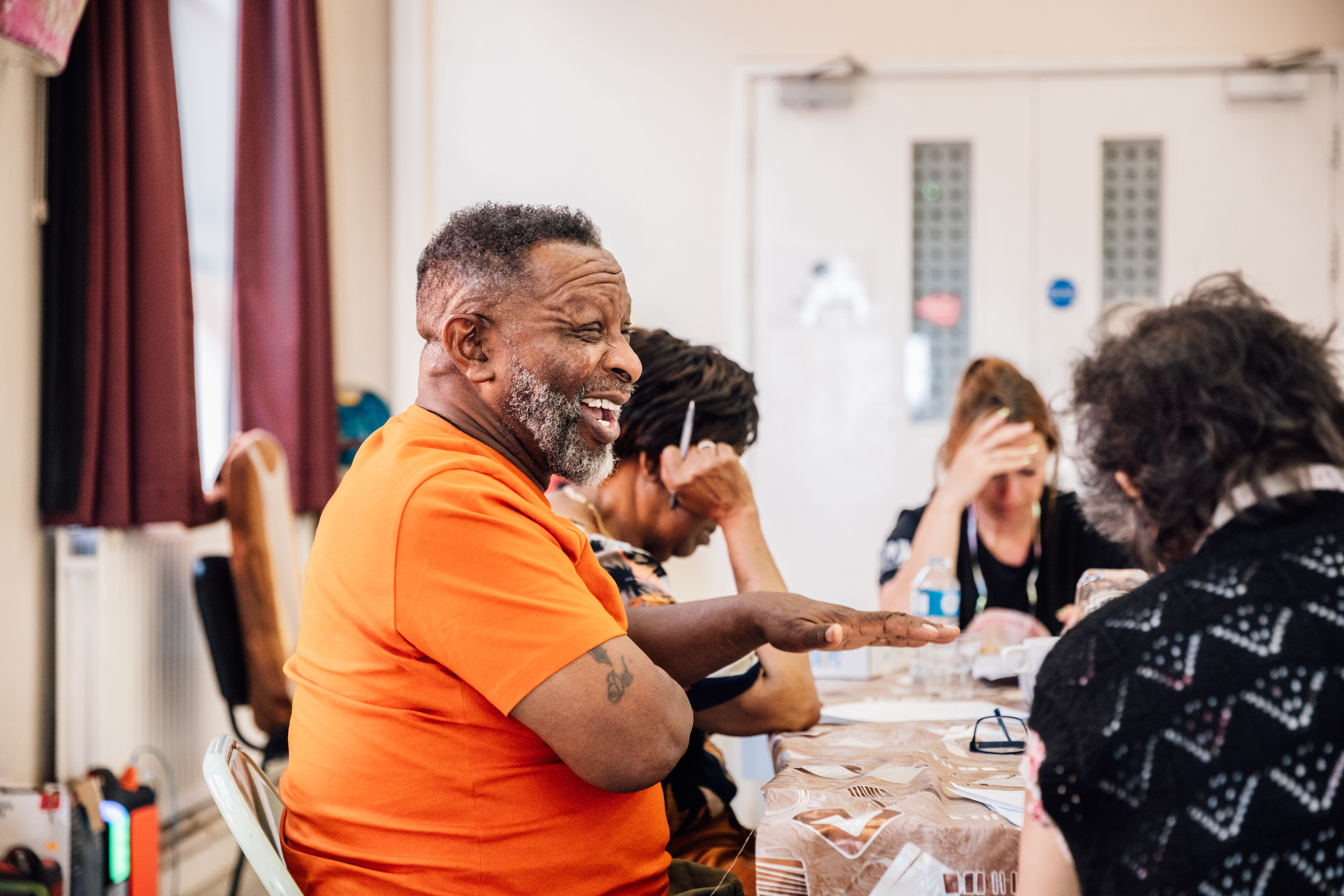
“It feels like a real home."
One Love Luncheon Club Member
References:
- "Hidden Toil Behind Shiny Fronts: experiences of living in a new housing area with little income", Keetie Roelen, et al, The Open University, July 2025
- “Population, health and healthcare use in Milton Keynes, 2021 to 2043: Director of Public Health Report 2024”, Milton Keynes City Council, 2024; accessed November 2025
- Local indicators for Milton Keynes, ONS; accessed November 2025
- MKCF / Opinium Survey , Sept-Oct 2025
- Community Life Survey 2023/24 annual publication, Department for Culture, Media and Sport, October to March 2024, pub. 4 December 2024; accessed October 2025
- Umbrella Project, information shared directly, October 2025
- Impact Report 2024/25, MK College Group, 2025
Make an enquiry
Have any questions? Feel free to get in touch with our team.