
Poverty and Disadvantage
Poverty and disadvantage are in the spotlight this year, as the UK conversation continues to centre on the cost-of-living crisis, and the new Index of Multiple Deprivation was released in autumn 2025.

Deprivation is defined in the Index as people’s unmet needs, a lack of access to opportunities and resources which we might expect in our society.
The 2025 Index, the first since 2019, allows a fresh comparison of deprivation across England. The lower an area’s ranking, the more deprived that area is.*
Milton Keynes remains less deprived than the England average, though its ranking is slightly lower than in 2019, meaning it is ranked as more deprived than in the last release.
- 53% of local authorities in England are more deprived
than Milton Keynes [1] - 157 / 317 - Milton Keynes’ 2025 IMD rank (based on
England aggregated local authorities) [2]
The publication of the OU’s report “Hidden Toil Behind Shiny Fronts: experiences of living in a new housing area with little income”, in July 2025, has also shed a strong light on the complex picture of poverty and disadvantage in the city.
Sharing the results of a citywide survey, followed by in-depth qualitative research in new estates (primary Eagle/Glebe Farm and Whitehouse), the study, “Highlights the divergence of low-income residents’ experiences compared to neighbours who are more comfortably off, and how this hampers the creation of a shared reality and inclusive community”. The key issues highlighted in the
report are:
- Poor housing quality and lack of responsiveness from
housing organisations. - Large distances to schools, jobs, shops and GP surgeries.
- Lack of public or other viable means of transport
- Limited community building and development
The report does not just highlight the needs of low-income residents, but also how hidden these needs are in the city. As one survey respondent says: “Poverty can be discrete and fairly well hidden in MK partly because of the layout with trees obscuring some neighbourhoods, and because the grid roads mean people do not need to travel through deprived communities.” [3]
The report also found that people who lived in newer housing estates were more likely to underestimate the size of child poverty in the city than people who lived in older estates. [4]
- 7% - increase in children in Milton Keynes living in low-
income families (relative measure) between 22/23 and
23/24. The UK level increase was 1%. [5] - 11,619 - children at school in MK who are entitled to free
school meals (above regional neighbours, but lower
than national rates) [6]
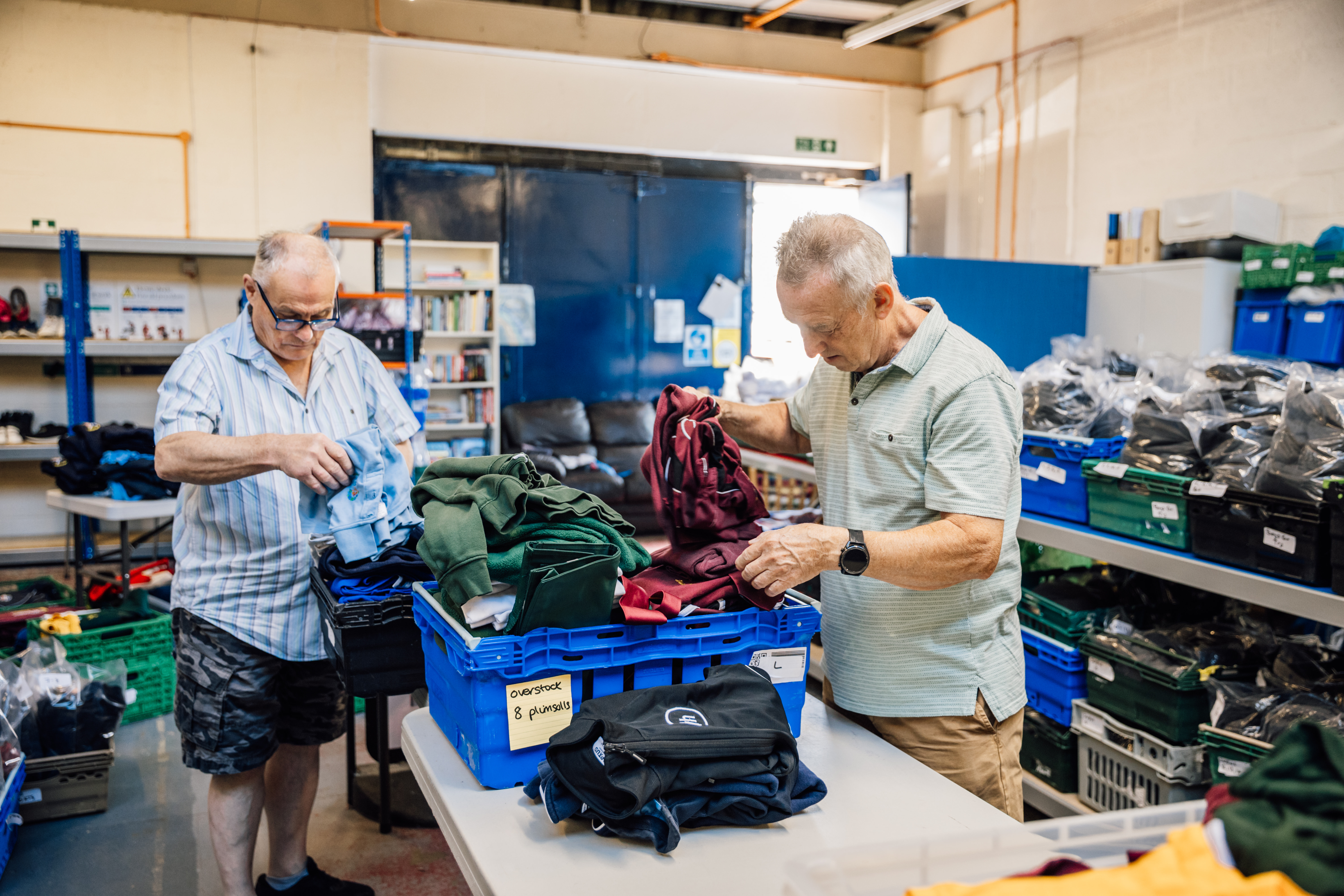
These issues are faced by residents across the city, and speak to the growing reliance on the voluntary and school sectors.
The Hidden Toil report explains:
“As Milton Keynes continues to grow, concerns aren’t limited
to new estates. Schools and voluntary organisations are increasingly filling gaps left by shrinking welfare services, taking on roles that extend beyond their core responsibilities such as running food banks and offering families’ social and emotional support.” [7]
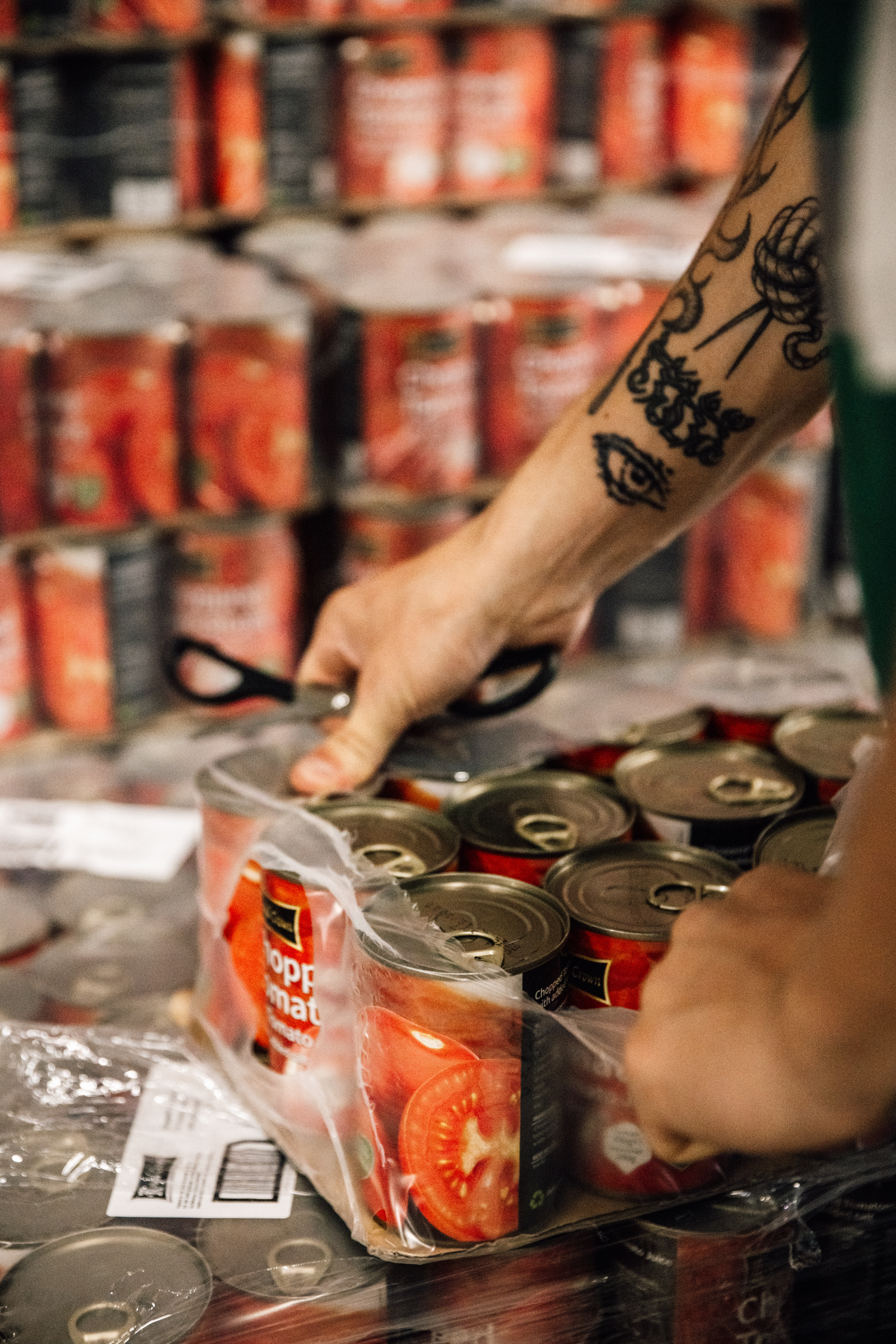
Workers in these sectors are managing heavier, more complex caseloads in an environment of diminishing resources. Organisations such as MK Foodbank, MK Money Lifeline, WorkForUs, SAASSBMK and Action4Youth are all seeing their service users consistently presenting with more complex needs, whether that’s mental health concerns, pressures from the cost of living, PIP support, or the complexity of infrastructure and debt relationships.
*For a full explanation of the IMD and how it works, please see the
introduction.
As a system, relying on ad hoc support from schools and stretching the resources of voluntary organisations is not sustainable. But one of the strengths of Milton Keynes’ voluntary sector, cited by many organisations, is the proactive attitude to collaboration, with a goal of systems change.
The Beyond Food project, MK Foodbank’s collaboration with MK Money Lifeline, part-funded by MK Community Foundation, is designed to tackle this complexity, as well as some of the underlying factors that trap people in cycles of poverty. This includes providing face-to-face support and individual counselling to help individuals transition into financial stability and self-sufficiency.
Beyond Food represents an evolutionary shift for MK Food Bank. With no end to high living costs in sight, and the additional pressure this puts on resources, we are also now focusing our attention towards longer-term solutions that address the drivers of need and causes of hunger and poverty. Louise Hobbs, MK Food Bank
- 145 - Number of case files for Beyond Food opened, Jan-Sept 2025 [8]
Vital Thinking
How can collaborations grow to support the sustainability of voluntary organisations, sector workers, and, most importantly, the people who need their support during a time of continued financial hardship?
Kings Community Centre
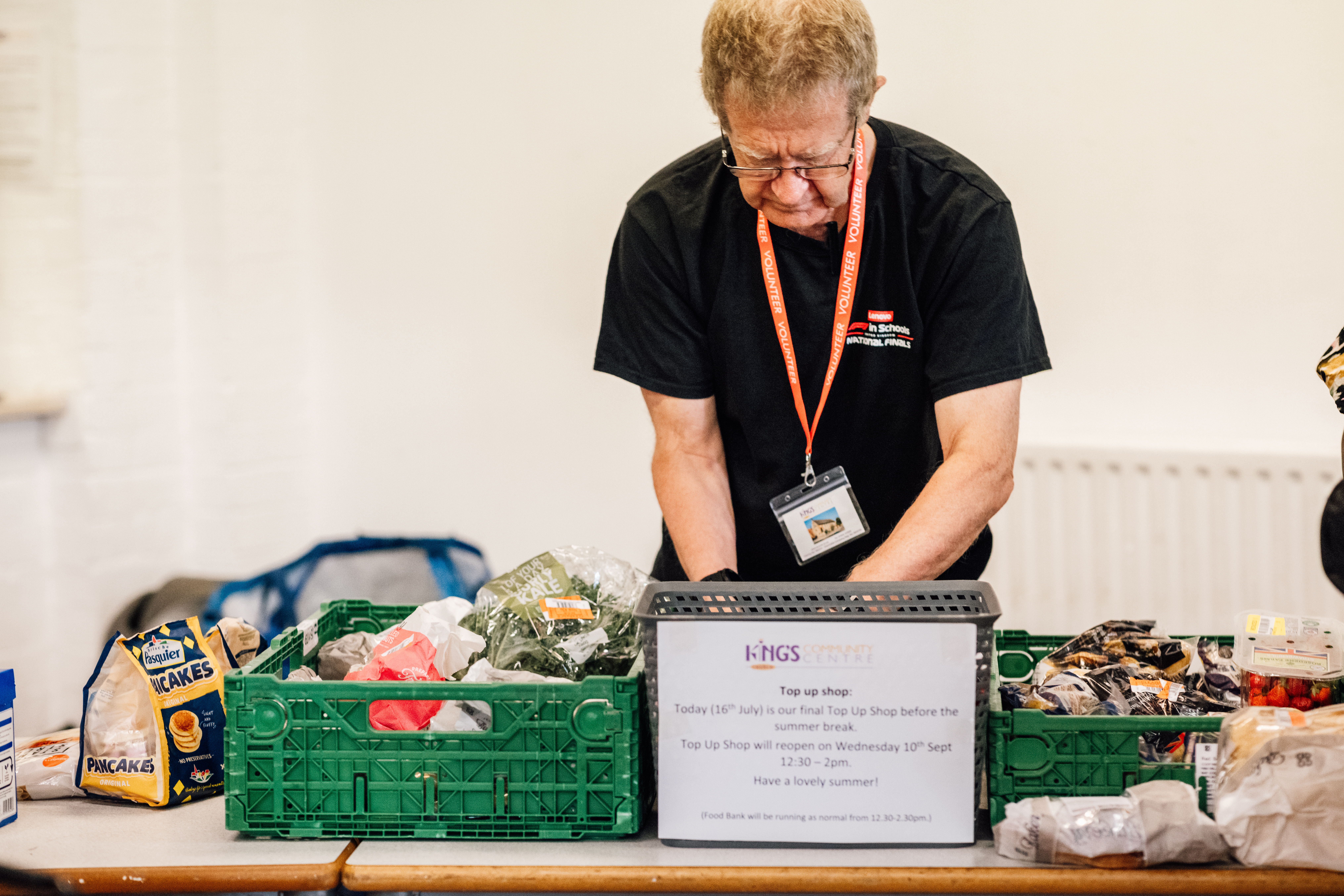
King’s Community Centre (KCC) runs several community services out of King’s Church in Wolverton. It operates the largest food bank in the city and a lunch drop-in, launched in 2016. What began with 30 people now provides more than 18,000 servings a year. KCC also runs a top-up shop, which opened in 2021 and has grown from 50 to over 1,300 users, as well as a weekly soft play session for families of any size.
Bringing KCC to life:
A local family began using MK Food Bank, and later KCC’s lunch drop-in, for about two years after the husband and father lost his job during the financial crisis. Like many do, they eventually stopped coming.
About a year later, on a Thursday lunch drop-in, the dad walked in with tears in his eyes. “Do you remember me?” he asked. “Of course,” I said. “How are you? Do you need anything?”
He replied, “No, I don’t need anything. I haven’t been in because I got a new job driving long-distance. I’ve just come to say thank you for all the food and support you gave us during those years of hardship, and for the chats and encouragement. You kept us going. We wouldn’t have made it through without you. I’m okay now, we’re okay now, and it’s thanks to all of you here, for your love and care.”
Spoken to Andy Forbes
“Beyond Food represents an evolutionary shift for MK Food Bank. With no end to high living costs in sight, and the additional pressure this puts on resources, we are also now focusing our attention towards longer-term solutions that address the drivers of need and causes of hunger and poverty."
Louisa Hobbs, MK Food Bank
References:
- English Indices of Deprivation 2025, Local Authority Districts, Milton Keynes, Overall (IMD), Ministry of Housing, Communities and Local Government; accessed November 2025.
- English indices of deprivation 2025: statistical release, Ministry of Housing, Communities and Local Government, 17 November 2025; accessed November 2025.
- "Hidden Toil Behind Shiny Fronts: experiences of living in a new housing area with little income", Keetie Roelen, et al, The Open University, July 2025
- "Hidden Toil Behind Shiny Fronts: experiences of living in a new housing area with little income", Keetie Roelen, et al, The Open University, July 2025
- Children in low income families: local area statistics, financial year ending 2024, Department for Work and Pensions, March 2025; accessed November 2025
- Children’s Services Data, shared by Milton Keynes City Council, October 2025
- Open University Hidden Toil Report
- MK Foodbank, Information shared directly, October 2025
- MK Foodbank, approximate statistics, information shared directly, October 2025
Make an enquiry
Have any questions? Feel free to get in touch with our team.